
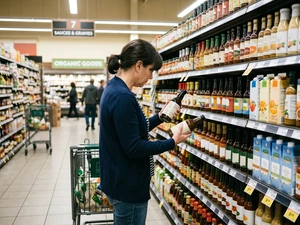
How Americans Are Adjusting Grocery Budgets in 2026
Laura Bennett
Updated Jun 28, 2026
Budgeting Is Up, and Groceries Are Where It Shows
A YouGov survey conducted in February 2026 among 1,340 nationally
representative U.S. adults found that 53 percent of Americans have set a
formal budget for the year - up from 46 percent in 2025. The increase
reflects a broader pattern of financial caution that consumer behavior
researchers describe as a response to elevated prices and persistent
economic uncertainty. Groceries have emerged as one of the most visible
areas where that caution is translating into changed behavior.
Among respondents who expect their financial situation to worsen in
2026, one in three said they plan to cut back specifically on grocery
spending. For those expecting improvement, the figure was closer to one
in five. Across the full survey, grocery costs ranked among the most
commonly cited sources of ongoing financial pressure, alongside housing
and utilities.
What the Numbers Show About Spending
Data from Empower’s Personal Dashboard, which tracks actual
transaction-level spending across its user base, found that the average
American household is currently spending approximately 667 dollars per
month on groceries. The figure varies significantly by generation - Gen
X households average 807 dollars per month, followed by Baby Boomers at
696 dollars, Millennials at 643 dollars, and Gen Z at 335 dollars. The
generational variation reflects differences in household size,
purchasing patterns, and where each group is in the family formation
lifecycle.
The USDA’s moderate-cost food plan for a family of four - two adults and
two school-age children - puts the monthly grocery benchmark at
approximately 1,374 dollars in 2026. That figure represents what the
USDA estimates a typical family should expect to spend with all meals
prepared at home, on moderate-quality food, without excessive waste. It
is a planning benchmark, not a ceiling.
Grocery prices have risen approximately 26 percent in cumulative terms
since January 2020, according to consumer spending analyses. That
increase has not reversed. Current prices reflect a new baseline rather
than a temporary spike.
How Behavior Is Changing
Consumer behavior reporting from early 2026 documents several consistent
shifts in how Americans are approaching grocery shopping. More shoppers
are spending time comparing prices across stores and products before
purchasing. Store-brand and generic product adoption has accelerated -
more than half of consumers in an Empower survey said they had switched
to a generic brand due to cost considerations. Coupon use has increased,
though consumer analysts note that couponing delivers relatively modest
savings compared to more structural changes like meal planning.
Meal planning - deciding what to cook before shopping rather than at the
store - is consistently identified in research as one of the
highest-leverage behavioral changes available to households trying to
reduce grocery costs. Studies cited in analyses by consumer credit
organizations suggest that households that plan meals before shopping
spend 15 to 20 percent less on food overall, primarily through reduced
impulse purchases and less food waste.
The USDA estimates that the average American household discards roughly
30 to 40 percent of the food it purchases. At the current average
spending level of 667 dollars per month for a single household, that
could represent more than 200 dollars per month in purchased but
unconsumed food - a figure that consumer financial advisors consistently
point to as the most accessible source of meaningful grocery savings.
What Tariffs Are Adding
Grocery prices in 2026 carry an additional layer of pressure from
current trade policy. The Tax Foundation estimated in April 2026 that
the current tariff regime adds approximately 700 dollars per household
per year in higher prices on average, with grocery-related items
accounting for a portion of that. USDA inflation data put food-at-home
price increases at 3.1 percent in February 2026 - a figure that arrives
on top of roughly 25 percent in cumulative food price increases between
2020 and 2024.
Tariff exposure on groceries is concentrated in specific categories -
imported produce, packaged goods with foreign-sourced ingredients, and
processed foods with complex supply chains. Domestically sourced staples
like eggs, domestic produce in season, and store-brand products with
primarily domestic supply chains tend to carry lower direct tariff
exposure.
The Bigger Picture
The combination of baseline food inflation, tariff pass-through, and
ongoing household financial pressure has made grocery spending one of
the clearest places where the broad economic environment becomes visible
in daily life. The behavioral shifts showing up in 2026 - more budgets,
more price comparison, more generic purchasing - are not dramatic. They
are the accumulated small adjustments of households recalibrating to a
cost structure that has changed substantially from where it was four
years ago.
References: U.S. consumer spending and budgeting trends in 2026 | Tracking Americas food spending

AI-Assisted Content
The News And Beyond team was assisted by generative AI technology in creating this content.
Trending
Summer Electricity Bills Are Set for a Record High
A Summer Cost That Keeps Climbing American households are on track to pay more to...
Laura Bennett

These Cash Back Cards are Turning Heads
Sponsored

Why AI Summaries Are Killing Website Traffic (What Pew Research Found)
You search for a question on Google. At the top of the results, a summary...
Alex Mercer

These 10 Money Moves Could Save Seniors Hundreds
Sponsored

What the Medicare Part D Drug Cap Means at the Pharmacy
Two Changes That Took Effect in January Two significant changes to Medicare prescription drug coverage...
Erin Calloway

Why Americans Are Rethinking Retirement Timelines in 2026
The concept of a planned retirement at a fixed age is shifting. Not abruptly, and...
Thomas Hale

The Hidden Drain on Your Bank Account
Sponsored

The Walking Habit Physical Therapists Recommend Most
Why Walking Matters More Than Other Exercise Physical therapists and gerontologists consistently recommend the same...
Susan Blake

The Privacy Setting More Users Are Quietly Turning On
The Step That Makes the Biggest Difference Consumer protection organizations, cybersecurity firms, and government agencies...
Ryan Ellis

Why Irregular Sleep Schedules Carry More Risk Than Short Sleep
The Part of Sleep Advice That Gets Left Out Most guidance about sleep focuses on...
Emily Carter

Why More Adults Are Paying Attention to Balance Training
A Risk That Grows Quietly Among adults 65 and older, falls are the leading cause...
Emily Carter

Where Summer Cooling Costs Are Climbing Most
No Region Is Escaping This Summer While the national average for summer electricity costs is...
Daniel Reeves

How Drug Prices Are Sending Mixed Signals in 2026
The prescription drug cost story in 2026 is not a single headline. It is two...
Thomas Hale

How Medicaid Changes Are Reshaping State Budgets
When federal Medicaid funding decreases, states face a decision that has no clean answer: absorb...
Erin Calloway
The Toll-Text Scam Hitting Phones Right Now
A Text That Sounds Routine The message arrives on a phone and reads like an...
Alex Mercer
The Bank Text That Looks Real but Is Not
A Phone Call That Sounds Like Your Bank The phone rings and caller ID displays...
Ryan Ellis

Social Security's 2032 Warning Could Mean Smaller Checks
A Deadline That Just Got Closer The Social Security Administration released its 2026 annual Trustees<br...
Thomas Hale

What This Year's Hiring Slowdown Means for White-Collar Work
The unemployment rate held at 4.3 percent in April. By that measure, the labor market...
Thomas Hale